Lizeth Samboni, La Esmeralda, Sidra Washed, Colombia
Roaster: SEY
Notes
Lizeth Samboni, La Esmeralda, Sidra - Washed, Colombia | SEY
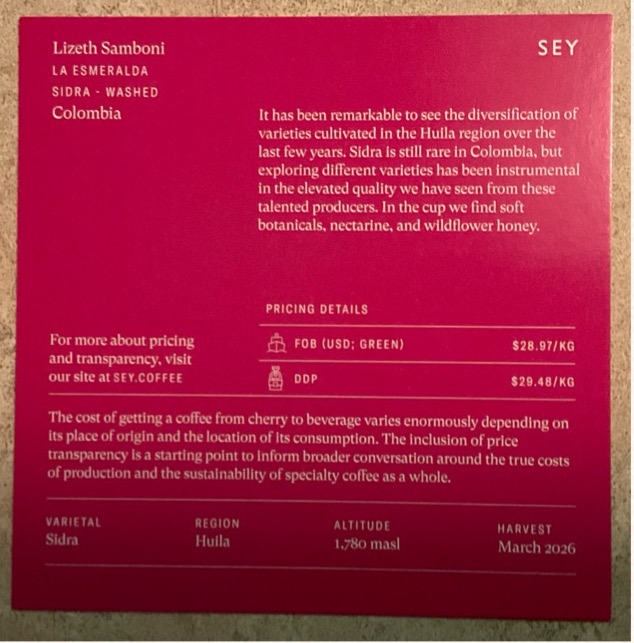
SEY writes that it has been remarkable to see the diversification of varieties cultivated in Huila over the last few years. Sidra is still rare in Colombia, and exploring different varieties has been instrumental in the elevated quality SEY has seen from these producers. In the cup the card lists soft botanicals, nectarine, and wildflower honey. SEY’s page now marks this coffee as no longer available.
facts
- Producer: Lizeth Samboni
- Farm: La Esmeralda
- Process: Washed
- Variety: Sidra
- Roasted: October 5, 2026 (“best after two weeks”)
- Harvested: March 2026
location: Colombia
- Region: Huila
- Elevation: 1,780 masl
pricing
- FOB (USD; green): $28.97/kg
- DDP: $29.48/kg
processing
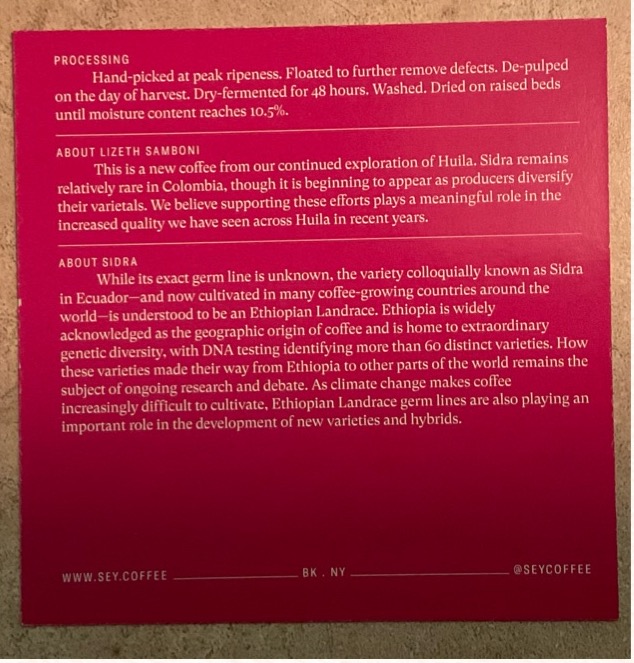
Hand-picked at peak ripeness and floated to further remove defects. De-pulped on the day of harvest, dry-fermented for 48 hours, and washed. Dried on raised beds until moisture content reaches 10.5%.
about Lizeth Samboni
A new coffee from SEY’s continued exploration of Huila. Sidra remains relatively rare in Colombia, though it is beginning to appear as producers diversify their varietals. SEY believes supporting these efforts plays a meaningful role in the increased quality it has seen across Huila in recent years.
about Sidra
While its exact germ line is unknown, the variety colloquially known as Sidra in Ecuador, and now cultivated in many coffee-growing countries around the world, is understood to be an Ethiopian Landrace. Ethiopia is widely acknowledged as the geographic origin of coffee and is home to extraordinary genetic diversity, with DNA testing identifying more than 60 distinct varieties. How these varieties made their way from Ethiopia to other parts of the world remains the subject of ongoing research and debate. As climate change makes coffee increasingly difficult to cultivate, Ethiopian Landrace germ lines are also playing an important role in the development of new varieties and hybrids.
references
Details
| ROAST LEVEL | light |
|---|---|
| PROFILE | soft botanicals · nectarine · wildflower honey |
| BLEND | single-origin |
Referenced In
Beans
- bean log 2026-10-27burnt ground rhinestones
- bean log 2026-10-17pensieve
- bean log 2026-10-14sidra ascent