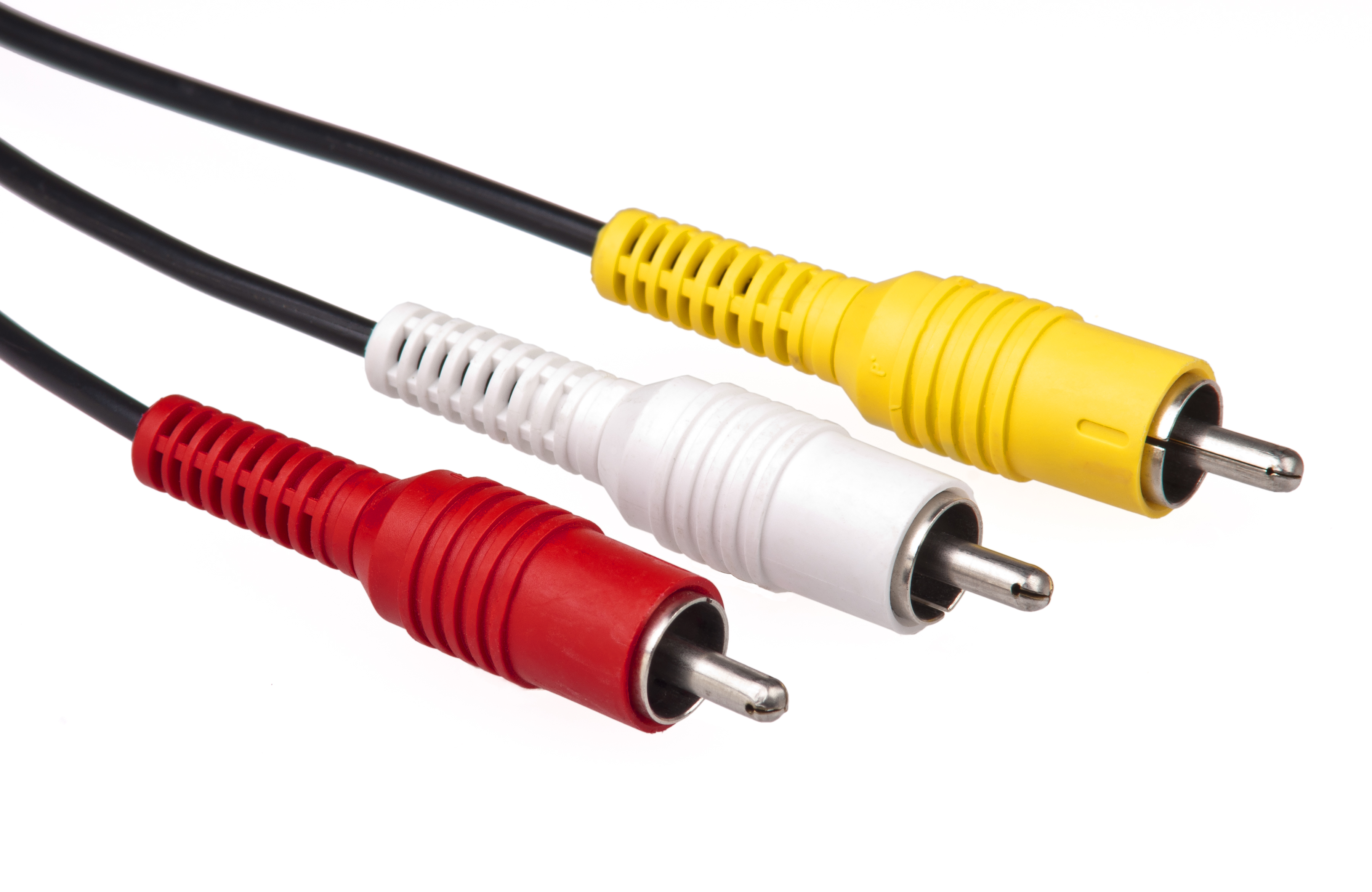
RCA/Connector/Ref/RCA Male
Properties
- tags
- Diataxis/Reference, RCA, RCA/Connector
RCA Male Connector Reference
Visual Reference
Overview
- Male RCA plug, the connector found on the end of an RCA cable
- Coaxial design: a center pin carries the signal, surrounded by an outer metal shell that carries ground/shield
- Introduced by the Radio Corporation of America in the late 1930s/1940s, originally to connect phonograph players to radio receivers
- Carries a single signal per connector — stereo audio, component video, etc. use multiple RCA plugs in parallel
Physical Specifications
- Outer shell diameter: ~9.5 mm (3/8 in)
- Center pin: thin single pin, diameter varies slightly by manufacturer
- Orientation: no keying; the shell simply slides over the mating jack's barrel
- Gender: Male (plug)
Signal Types and Color Coding
- Yellow: composite video
- White or black: left channel analog audio
- Red: right channel analog audio
- Green / Blue / Red trio: component video (Y/Pb/Pr)
- Orange: digital coax audio (S/PDIF)
Compatibility
Common Use Cases
- Composite and component video cables
- Analog stereo audio cables (turntables, amplifiers, TVs, mixers)
- Subwoofer/LFE cables in home theater systems
- S/PDIF digital audio (coax)
Variants
Standard RCA Plug
- Solid center pin, simple crimp or solder construction
"Bullet Plug"
- Audiophile variant (e.g. Eichmann) with a hollow center conductor and a separate return-signal pin, intended to reduce contact-related signal degradation
Standards
- No single formal specification; the connector is a de facto standard maintained through consumer-electronics manufacturer compatibility
- Digital coax use is referenced in IEC 60958
Related References