Microfreak/UG/15 Using Scales
Properties
- logseq-entity
- Logseq/Entity/Book/Section/Level 1
15 Using Scales
- Scales can shape the emotion of a melody. Adding chord notes from the melody's scale strengthens its character: major notes may sound forceful and happy, while minor notes may sound sad. Responses to major and minor scales vary across musical cultures.
- The chromatic scale contains twelve notes: C, C♯, D, D♯, E, F, F♯, G, G♯, A, A♯, B. A scale selects notes from those twelve. Most scales use eight notes; pentatonic scales use five, and blues scales use six, combining five pentatonic notes with one chromatic note.
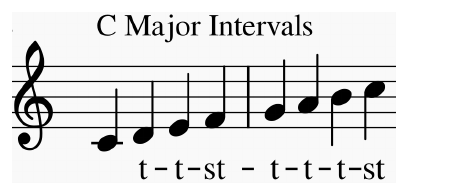
- C major, also called C Ionian, uses the white piano keys: C, D, E, F, G, A, B. The gaps between selected notes are whole tones or semitones. From C to D is a whole tone; from E to F is a semitone.
- C major follows the interval pattern tone, tone, semitone, tone, tone, tone, semitone.
- C Major Intervals
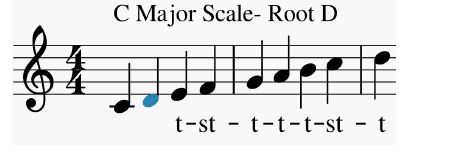
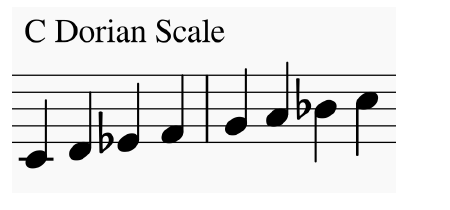
- Starting on D and playing only white keys gives the pattern tone, semitone, tone, tone, semitone, tone, tone. Applying that pattern from C produces a Dorian scale.
- C Major Scale, Root D
- C Dorian Scale
- Starting a C major scale on its fifth step gives a Mixolydian scale. Building scales by starting on different steps creates the church modes, now widely used in western music.
15 Linked References
Hierarchy
- MicrofreakUG15 Using Scales01 Scale Settings
- MicrofreakUG15 Using Scales01 Scale SettingsMajor
- MicrofreakUG15 Using Scales02 The Scale Root
- MicrofreakUG15 Using ScalesAsset01-C-Major-Intervalspng
- MicrofreakUG15 Using ScalesAsset02-C-Major-Scale,-Root-Dpng
- MicrofreakUG15 Using ScalesAsset03-C-Dorian-Scalepng