AI/ES/25/11 Code/LEAD/20 Thu/1345 Proactive Agents Kath Korevec Google Labs
1:45pm - 2:04pm Talk: Proactive Agents and JulesAI
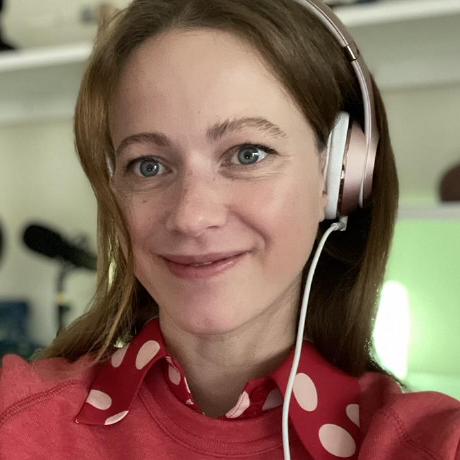
- Person/Kathy Korevec Twitter LinkedIn - Director of Product, Google Labs
Talk: Proactive Agents and JulesAI 05:00:11 - Google Labs (Kath Korevec): The Shift from Reactive to Proactive Agents ("Jules")
Slide — Proactive Agents (Google Labs)
- Visual layout: full-bleed pixel-art scene of a person overwhelmed at a sink, dwarfed by a chaotic mountain of dishes erupting upward in neon blue/yellow/pink. The pile visually “overflows” like a memory leak; stray pixel-noise and glitch-text (e.g.,
DISH_PILE_EXE, fragments of code) imply runaway processes. - Left-top text: “Remember, do the dishes” — positioned as a prompt-style reminder, functioning as the human need that proactive agents should anticipate.
- Center figure: person in an apron, arms half-raised, facial expression exhausted/defeated. Their small scale vs. the towering dish-heap dramatizes cognitive overload → the problem space proactive agents aim to reduce.
- Framing: domestic chore = metaphor for unbounded, unaddressed tasks. Signals the theme: agents that notice entropy accumulating and act before the user asks.
- Footer bar: “PROACTIVE AGENTS” and speaker line: KATH KOREVEC / Director of Product / Google.
- notes
- she was remembering whether dishes were done
- that's like agents
- humans are unitaskers
- we think we're multitaskers, but we are executing many tasks very rapidly
- switching has huge costs
- for async agents
- how can we babysit 16 claude code monitors?
- I don't want to manage work or coding agents, I want to build
- she mentions anticipating needs ...
Slide — Four essential systems in coding (for proactive agents)
- Layout: four pixel-art tiles in a 2×2 grid, each a different bright color on a starfield background:
- Observation (pink, top-left)
- Personalization (cyan, top-right)
- Timely Action (orange, bottom-left)
- Seamless Integration (purple, bottom-right)
- Meaning:
- Observation: continuous noticing—patterns, drift, emerging friction, silent failures.
- Personalization: filtering what you never want to deal with; tailoring boundaries of autonomy.
- Timely Action: appearing precisely where you already work—intercepts in-flow, not out-of-band interruptions.
- Seamless Integration: fitting across tools, surfaces, and workflows without seams or setup cost.
- Speaker intent: these four pillars must converge; stitching them together is the hard part of proactive systems design.
Slide — Reactive systems
- Visual scene: a worker collapsed face-down on a desk, laptop still open. A thought bubble with an “X” shows cognitive shutdown.
- Right side: a frantic octopus-bot hovers, eight limbs flailing, each emitting yellow speech bubbles: “RESPOND TO EMAIL!”, “REVIEW DOCS!”, “FOLLOW UP!”, “URGENT! NOW!”, “REPLY FAST!!!!”. The creature embodies interrupt-driven overload.
- Message: reactive systems are “efficient” only in the narrow sense of responding instantly; experientially they are punishing. They trigger user stress, context-switching, and task debt.
- Speaker intent: contrast with proactive agents: dozens of background workers noticing friction, pre-resolving errors, prepping migrations, reducing user burden before the user even asks.
Slide — Four essential systems in coding (for proactive agents)
- Layout: four pixel-art tiles in a 2×2 grid, each a different bright color on a starfield background:
- Observation (pink, top-left)
- Personalization (cyan, top-right)
- Timely Action (orange, bottom-left)
- Seamless Integration (purple, bottom-right)
- Meaning:
- Observation: continuous noticing—patterns, drift, emerging friction, silent failures.
- Personalization: filtering what you never want to deal with; tailoring boundaries of autonomy.
- Timely Action: appearing precisely where you already work—intercepts in-flow, not out-of-band interruptions.
- Seamless Integration: fitting across tools, surfaces, and workflows without seams or setup cost.
- Speaker intent: these four pillars must converge; stitching them together is the hard part of proactive systems design.
Slide — Proactive systems
- Scene: the same apron-wearing character now relaxed, reclining into a chair, smiling. The environment is calm: a lamp softly lit, no clutter, no urgency.
- Right side: a circular thermostat UI reading 72°F, green leaf icon, with pixel arrows pointing to it. Subtext: AUTO-ADJUSTING FOR COMFORT.
- Concept: proactive systems = Google Nest as archetype. You configure once; it observes departures/returns, learns habits, and eventually removes the cognitive load of climate control.
- Analogy: the body as the original proactive system — rising heart rate before collapse, anticipatory adjustments during movement.
- Speaker intent: proactivity isn’t sci-fi; it’s human-native. AI should behave like a good teammate: anticipating, smoothing friction, removing work before it appears.
Slide — Jules (Google Labs) and the 4 levels of proactive async agents
- Central metaphor: Jules = octopus-chef agent. Multiple arms = parallel, asynchronous competencies. Kitchen = software project environment.
- Level 1 — Collaboration emerges: helper arms begin assisting without explicit prompting; agent picks up routine prep work, plating, chopping. Human + agent co-work naturally.
- Level 2 — Framework & deployment awareness: kitchen-manager mode. Jules recognizes your tools, stacks, conventions. Adjusts workflow to fit your style, not a generic template.
- Level 3 — Context → consequence understanding: December scene with many downstream tables: users eating the final dishes. Jules now sees effects of code changes on customers; telemetry and stats flow in from online store → kitchen → dining room.
- Level 4 — Multi-agent ecosystem:
- Jules: software-aware builder.
- Stitch design agent: UI/UX adaptation.
- Data/insights agent: interprets telemetry, connects signals, drives performance + design adjustments.
- Core mechanic: human stays in the loop—nudging, correcting, redirecting. The system learns when to act autonomously and when to defer.
- Outcome: aligned agents + humans collaborating across the entire project lifecycle.
Slide — Where we are now, and where we’re headed
- Visual: two Jules avatars: left = casual T-shirt, phone in hand (today’s agents). Right = armored, glowing, tablet in hand (next-gen system-aware agents). Between them: a vertical stream of code, like DNA, marking evolution.
- Current direction:
- System awareness: agents understand environment shape, dependencies, consequences.
- Memory: agents write/edit their own memories; developers can inspect and steer them.
- Critic agent: adversarial validator—generates a Playwright script and runs it through trajectory before changes land.
- TODO-bot: crawls repo, surfaces future-intent notes, proactively offers implementations.
- Best-practice layer: continuous suggestions woven through workflow.
- Environment-setup agent: used in evals and external runs to infer env behavior automatically.
- JIT context: instant cheat-sheet injection for Jules—avoids repeated Q&A with the dev.
Slide — Demo? (proactive task surface)
- Visual: dark background with a centered mock UI panel. Top input box reads “Fix Jed’s code …” with a GitHub repo tag (
sambecker/ios-boba-app, branch: main). - Below: Suggested tasks auto-generated by Jules:
- Improve frontend performance by redesigning card state (+199 / –299) — Review
- Fix security hole in backend authentication (+75 / –18) — Review
- Other recommended tasks:
- Create landing page A/B test
- Upgrade core dependency with known vulnerability
- Add new API endpoints for new UX
- Intent: although the live demo failed, this panel shows Jules’ proactive mode: surfacing actionable, ranked tasks before the user asks.
Slide — Demo (ADK-Python proactive task mining)
- Scene: dark UI panel showing Jules’ recommendations for
roberttracz-g/adk-python after repo indexing. - Task list: items like removing LRO polling workaround, removing Streamlit timeout workaround, finishing Claude integration reason, refactoring append logic, adding credential exchanger support.
- Signals: right-side confidence bars—green for high confidence, descending intensity for lower. Each task has Start, edit, and delete controls.
- Intent: Jules extracts TODOs, best-practice violations, and structural smells, ranking what it thinks it can accomplish plus what it believes should be done.
- Benefit: no prompt-writing; tasks appear automatically. Cognitive load drops. Auto-start is in progress, but manual curation remains possible.
Slide — Demo (task drill-down, coming in December)
- View: expanded recommendation for
roberttracz-g/adk-python. Three high-confidence tasks shown; the third (“Implement Finish Reason in Claude Integration”) is expanded. - Details surfaced:
- Description: finish_reason isn’t being set in
message_to_generate_content_response. - Location: file path + line (
anthropic_llm.py:194).
- Rationale: code already exists but is commented out—just needs to be enabled.
- Code context: snippet shows surrounding logic, TODO comments, and exact insertion point.
- Intent: this level of proactive guidance—pinpointing location, rationale, and patch target—lands in December.
Slide — A giant case study
- Visual: huge pixel-art bald head filling a Victorian bay window; somber, immobile expression. Purple brick exterior, teal curtains, glitchy scan-lines evoke a retro animatronic display.
- Story: she and her husband built a 6-foot animatronic head in their Haight-Ashbury Victorian—foam, epoxy, fiberglass. Neighborhood kids call it the bald head. Inspired by the Pee-wee Herman window-head gag.
- Problem: her workflow with Jules was: prompt → wait 10 minutes → try again. Debugging, research, and “ugly” plumbing blocked momentum.
- Insight: she wanted Jules to autonomously research fixes, debug, and handle the tedious substrate so she could focus on creative work—lasers from eyes, head tracking pedestrians, fun behaviors.
- Point: current tools create friction gaps that suppress creative throughput. Proactive agents aim to remove that gap and unlock continuous creativity.
Slide — Big steps
- Scene: pixel astronaut striding across a lunar surface; Earth hangs in the background. A flag with the squid-emblem flaps behind them—claiming new creative territory.
- Message: Take bold steps. Question everything. The future is ours to build.
- Intent: existing patterns—IDEs, code workflows—may vanish within months. Don’t cling to legacy assumptions. We collectively define how software will be built next; conferences like this are where that future is authored.