AI/ES/25/11 Code/LEAD/20 Thu/1005 2026 year ide died steve yegge gene kim amp sourcegraph
10:05am - 10:24am Talk: 2026: The Year the IDE Died
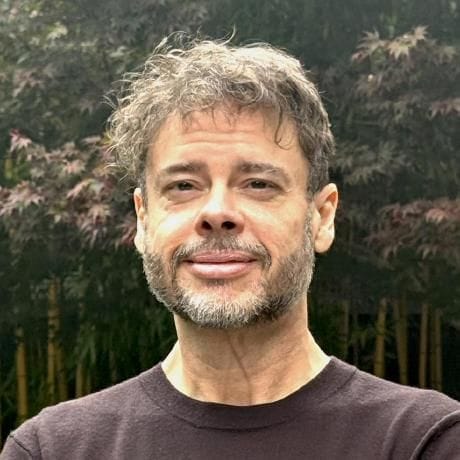

- Person/Steve Yegge Twitter LinkedIn - Engineering Leader, Sourcegraph/Amp
- Person/Gene Kim Twitter LinkedIn Website - Author & Researcher, IT Revolution
Talk: 2026: The Year the IDE Died 01:10:31 - Steve Yegge & Gene Kim Begin Their High-Energy "Vibe Coding" Talk
- As AI has grown more capable, software developers around the world have lagged behind the technology advances, and have consistently eschewed the most powerful tools. In this talk I explore why devs are staying 9-12 months behind the AI curve. I'll share a preview of what 2026's AI coding tools will be like, and paint a vision of where we go from here.
Person/Steve Yegge
AI Developer Trajectory — timeline layout
- A horizontal timeline with four numbered stations (1–4) spaced evenly across.
- 2023 (Step 1) sits above the first marker: "code completions (GitHub/CoPilot)." Visual cue: early, narrow capability.
- 2024 (Step 2) under the second marker: "chat-based programming (CursorAI, Windsurf, Cody)." Visual cue: dialog-driven coding replacing autocomplete.
- 2025 (Step 3) above the third marker: "agentic coding assistants (Claude Code, Codex, Cline, Amp, Gemini CLI, …)." Visual cue: richer toolchains with multi-step autonomy.
- 2026 (Step 4) by the final marker: “???” signalling an open frontier.
- Caption beneath: "Agentic coding is not the Final Form." Emphasis: next phase = orchestrators, implying multi-agent coordination rather than single-agent assistance.
Session context
- Title: 2026: The Year the IDE Died.
- Framing: devs lag 9–12 months behind AI progress; 2026 tools shift from assistants to fully orchestrated coding systems.
Coding Agents as Power Tools — conceptual layout
- Slide split left/right. Left block: analogy. Right block: limitation + need for evolution.
- Left side: Coding agents framed as manual power tools (drills, forklifts). Visual cue: interchangeable attachments → “an agent can be many tools.” Emphasis on skill: anyone can dabble, few master.
- Right side: Manual tools can build “anything” only until the project becomes too large/complex. Modern software exceeds individual capacity, even with AI. Closing line gestures toward industrial automation: move from power tools → CNC machines.
- Your gloss fits: Claude Code ≈ electric drill/saw — powerful but still fundamentally manual.
The Problem: Adoption — two-tile comparison
- Slide foreground shows two large rounded rectangles side-by-side.
- Left tile: "Most developers are still using CursorAI & Chat." Subtext: 2024 tools are already outdated relative to 2025–26 agentic systems.
- Right tile: “The Staff Engineer Curse: 10–15 years of experience.” Subtext: senior ICs lag in AI uptake while the rest of the org adopts quickly.
- Background faintly shows a person + futuristic UI panels, stressing contrast between legacy habits and new capabilities.
- Bottom line: slow adoption is dragging companies, generating frustration; upcoming case study: OpenAI + Codex.
- Your note aligns: the productivity gap is enormous between adopters and holdouts.
We've Seen This Movie Before — historical analogies
- Single-column layout listing past refusal patterns:
- Framing question: senior engineers repeating the same resistance pattern with AI.
- Closing line: behavior change is slow; automation always wins.
The New Quartz Crisis — stacked tiles
- Top row: two side-by-side boxes.
- Bottom wide tile: blunt prediction — old-style software development will be automated away, not over decades but 1–2 years.
- Your note tracks: this mirrors prior industry upheavals.
Adoption Depends on Having UI — two-column split
- Left column: Thesis: CLI agents are too hard; mass adoption requires a real UI. Supporting bullets:
- Right column: Current agent tools aren't moving toward UI, but instead reinforcing the CLI paradigm. Rhetorical jab: has Claude Code meaningfully improved since February?
- Comment: I like the concept of a Moldable Development environment - an UI that adapts to the task at hand
The Diver Problem — image-anchored metaphor
- Dominant visual: a lone scuba diver suspended in a narrow chasm, deep underwater — evokes isolation, depth, limited mobility.
- Text frames coding agents as divers sent “underwater” into your codebase.
- Closing question highlights the constraint: why rely on a single diver for everything?
- "should you send a product manager diver first right" sarcasm
Person/Gene Kim
Gene Kim Book Timeline — six-cover grid
The Great Amazon API Rearchitecture — mandate slide
- Left block: the famous Bezos API rules, with items 1–3 and 6 boxed in red for emphasis.
- Items 4–5 note tech-agnosticism and requirement for externalizable interfaces.
- Right black panel: aside noting #7 is a joke; enforcement attributed to Amazon CIO Rick Dalzell (ex–Army Ranger).
- Sets historical precedent for industry-wide architectural pivots driven by top-down mandates.
Our Belief and Observations — bullet-driven thesis
- AI's impact will reshape tech orgs at a scale ~100× larger than agile/cloud/CI/CD/mobile transformations.
- Breakthroughs don't just adjust workflows — they reconfigure entire organizations and economies around new production modes.
- Early case studies already hint at what this AI-driven reorganization will look like.
Person/Adrian Cockcroft: NoOps → NoDev — pull-quote layout
- Medium article: Person/Adrian Cockcroft, "Directing AI Native Development" (Oct 5, 2025) — shown on the left with garden thumbnail.
- Right excerpt:
Elite vs. Low Performers
Deployment Frequency
Deployment Lead Time
Deploy Failure Rate
Mean Time to Restore
- Elite: <1 hour
- Low: <1 day
- Difference: 2,604×
- Source: Google/DORA — 2019 State of DevOps Report (https://cloud.google.com/devops/state-of-devops/)
Our Definition: Vibe Coding
- "When the AI writes the code, and the human supervises…"
- "Anything besides typing in code by hand."
From Person/Dario Amodei's Foreword
- Vibe coding is both inspired and misleading:
- Core claim: vibe coding — using natural language to direct an AI model to write and iteratively improve software — is deadly serious.
- As of mid-2025, it's the only coding game in town (according to Person/Dario Amodei)
Person/Erik Meijer (VB, C#, LINQ, Hack)
- "If we are the last generation of developers to write code by hand, let's have fun doing it."
- "Let's not waste our most precious resource — time — on things a machine can do. Time can't be stored or created."
- Right side: Person/Gene Kim's post summarizing Meijer's talk:
Working With Person/Steve Yegge Developer of Programming Language/Hack
Crazy Things We've Heard
- “As an engineer, if I’m not spending the equivalent of my salary on tokens daily, I’m doing something wrong.”
- Implication: some orgs expect engineers to burn
Inline: 500–1000/day in AI compute as normal operating cost. The Value of Vibe Coding Acronym/FAAFO
- F: Build what I want faster
- A: Become more ambitious about what I can build
- A: Build things alone without needing a team
- F: Have more fun doing it
- O: Get more options — more swings at bat, more explorations
Irresistible Appeal To R&D Orgs
- Andy Glover, Director of Dev Productivity, OpenAI:
Booking.com (2025)
- Person/Bruno Passos, Group Product Manager, Developer Experience
- Presents Booking.com scale: 1.5M rooms booked daily, 500M monthly visitors, 24k employees, $23.7B revenue.
- Person/Laura Tacho, CTO, Developer Experience
- Source: https://videos.itrevolution.com/watch/1121936057
Travelopia (2025)
- Person/Sree Balakrishna, Technology Director, Innovation & Products
- Describes shift from 10–12-person squads → 4–6 cross-functional engineers → future business+developer pairs.
- States ambition: scale from $100M → $500M with the same 200 people.
- Highlights major win: a $1.5B/year travel company rebuilt a legacy application in only six weeks using AI-accelerated development.
- Source: https://videos.itrevolution.com/watch/1121937327
Fidelity (2025)
- Person/Tapabrata Pal, VP of Architecture
- Presents a high-level architecture: Neo4j DB → API → analytics UI, supported by repos, artifacts, containers, runtime.
- Demonstrates an AI-assisted prototype generating a software bill-of-materials knowledge graph UI from that architecture.
- He spent 5 days making this, instead of 6 months
- Even leaders with their own teams are frustrated, saying, can I prove this can be done
- Afterwards, he said, who can maintain this?
- Enter Person/Swathi (most junior on team), outlearning everyone on org
- Getting more headcount, because num consumers of app increase 10x
- Source: https://videos.itrevolution.com/watch/1121938969
Cisco (2024)
- Person/John Rauser, Senior Director of Software Engineering
- Person/Anand Raghavan, Senior Director of Engineering, AI
- Source: https://videos.itrevolution.com/watch/1002959532
AI Trust Increases With Experience
- Scatterplot with smoothing line: months using AI tools (x-axis) vs. AI trust score (y-axis).
- Y-axis represents how much you trust the AI.
- Trend: trust steadily rises over the first ~20 months, then levels around ~0.55–0.6.
Vibe Coding Workshop For Leaders
- Collage of apps, dashboards, data visualizations, mobile UIs, and interactive tools built during workshops.
- These represent real artifacts produced by leaders learning vibe coding hands-on.
- Key result: a 3-hour workshop achieved a 100% completion rate — every participant successfully built and shipped an AI-generated application.
Crazy Things We've Heard
- Tech leader quote:
Crazy Things We've Heard
- “We’ve had these stupid problems in applications that have been there for over a decade…
…we’ve never worked in that codebase. We used AI to generate a fix, and we submitted a PR…
…and the team accepted it." Crazy Things We've Heard
- “Our code velocity is so high that we’ve concluded we can only have one engineer per repo.”
- Interpretation: once AI accelerates output, the coordination cost of having multiple humans in the same project becomes very high.